
What Happened This Week in AI
Eight stories from a week when AI became cheaper, more specialized, and harder to see, plus what it means for you

If you liked this piece, you should check out:
Specialty Tokens: is your AI transformation partner. I run this firm to assess, train and implement AI and agents across your teams successfully.
Community: Throw in questions and meet other readers in the chat. Learning and requesting new content together.
What happened this week in AI? Let me walk you through it.
This weeks releases looked disconnected: a moderation model, an enterprise-search experiment, a cyclone forecaster, two Chinese frontier models, a chip acquisition, a memory shortage, and a leadership reshuffle at Google.
Here are the eight updates worth knowing:
1. AI memory capacity for 2027 is reportedly already allocated
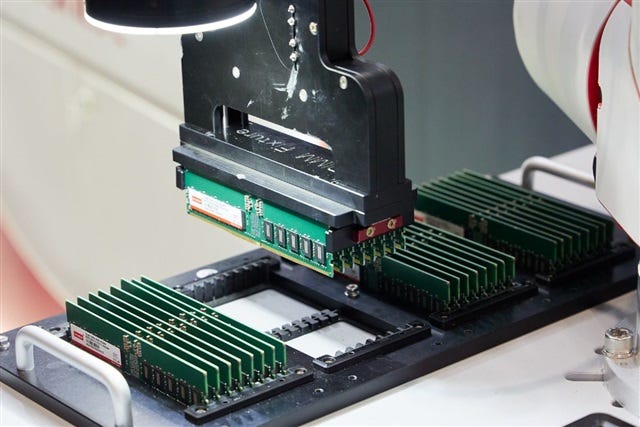
Image: DigiTimes.
DigiTimes reported that Samsung, SK hynix, and Micron have already allocated their 2027 DRAM and high-bandwidth-memory capacity. That’s insane. The suppliers are more careful than the headline. SK hynix says demand exceeds its supply capability and it has signed long-term agreements with about 10 customers. Samsung expects the shortage to deepen in 2027 and persist into 2028.
Cheaper inference does not mean the world uses less compute. It means we put AI behind more tickets, documents, databases, cameras, and devices. Unit costs fall while total demand climbs.
Why this matters at work: Your AI budget is not only a software budget, because capacity, latency, and vendor contracts can matter as much as the advertised price per token.
2. Mistral released a 3B model that guards models 7 times its size
Image: Mistral AI.
Shieldstral is a 3B open-weight safety model for text and images. You describe your policy in plain English at inference time, and it returns a safety score from one forward pass.
It runs on a single 16GB GPU. Mistral says it matches or beats open guard models up to 7 times larger across its evaluation suite.
The important part is not the benchmark. A team can run an adaptable moderation layer on its own infrastructure instead of sending every safety decision to another large hosted model.
Why this matters at work: Your company may be able to enforce its own rules around internal copilots, customer content, and sensitive media without paying a frontier model to review every interaction.
3. Neon and Castform trained a 4B model for enterprise search
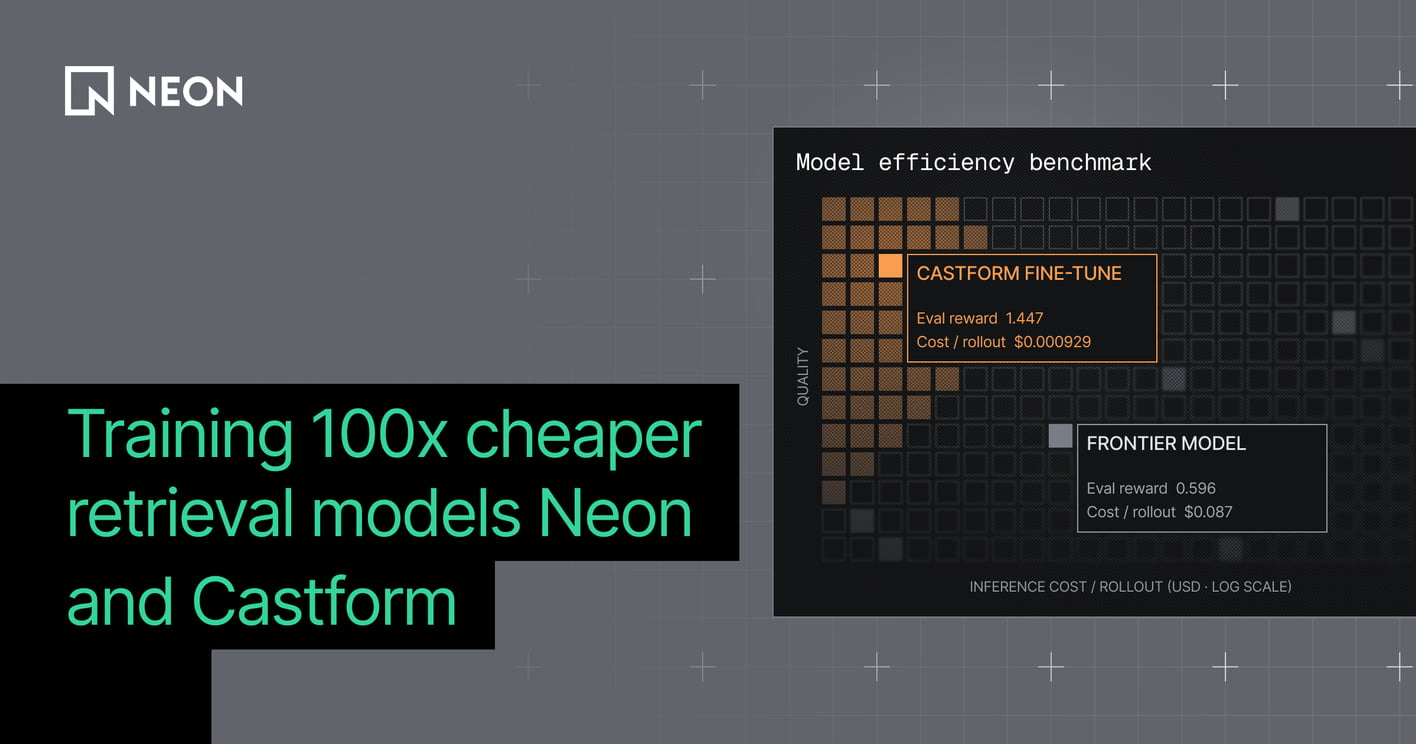
Image: Neon.
Neon and Castform post-trained a 4B open model for agentic retrieval over company data. Their case study says the specialist can match or beat GPT-5.6 Sol on the target task while open models cost roughly 100 times less.
This is a vendor-authored result. The post does not name the base checkpoint or publish enough detail to treat the 100 times claim as independently settled.
But the architecture is useful: give a narrow, frequent job to a smaller model and escalate only the difficult residue to the frontier.
Why this matters at work: Always-on search across company knowledge becomes economically plausible when a cheap specialist retrieves the evidence and an expensive model is used only for the hardest judgment.
4. WeatherNext can forecast cyclones one day earlier

Image: Google DeepMind.
WeatherNext Cyclones predicts a storm’s track, intensity, and wind structure up to 15 days ahead. Across its evaluation, the model gained more than 24 hours of forecast accuracy on average. Its 3-day forecast was as accurate as what prior systems could provide at 2 days.
Google released the code and model weights, including a mini version that can run in a free Colab notebook.
This is not a nicer chatbot. It is another day to move people, equipment, and emergency crews around the world to prepare.
Why this matters at work: The best AI return may not be writing faster, but moving an expensive or dangerous decision forward while there is still time to act.
5. DeepSeek made agentic reasoning cost cents
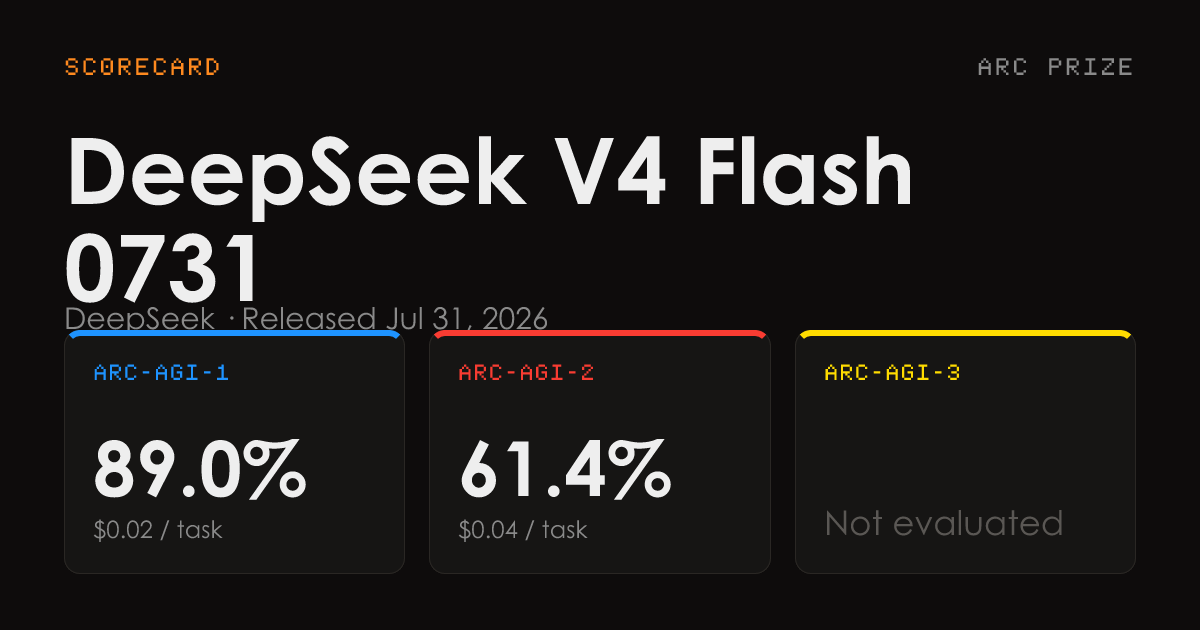
Image: ARC Prize.
The DeepSeek-V4-Flash-0731 checkpoint is MIT licensed. ARC Prize independently verified its Max configuration at 89.0% on ARC-AGI-1 Semi-Private for $0.02 per task. On the harder ARC-AGI-2, it reached 61.4% for $0.04 per task.
Those prices apply to these evaluations, not every coding or research assignment. But cents per reasoning task changes what a team can afford to leave running in the background.
Why this matters at work: Cheap reasoning lets you run more first-pass analysis, testing, coding, and document review before a person or premium model handles the consequential exceptions.
6. Qwen3.8-Max sold a different picture of AI work
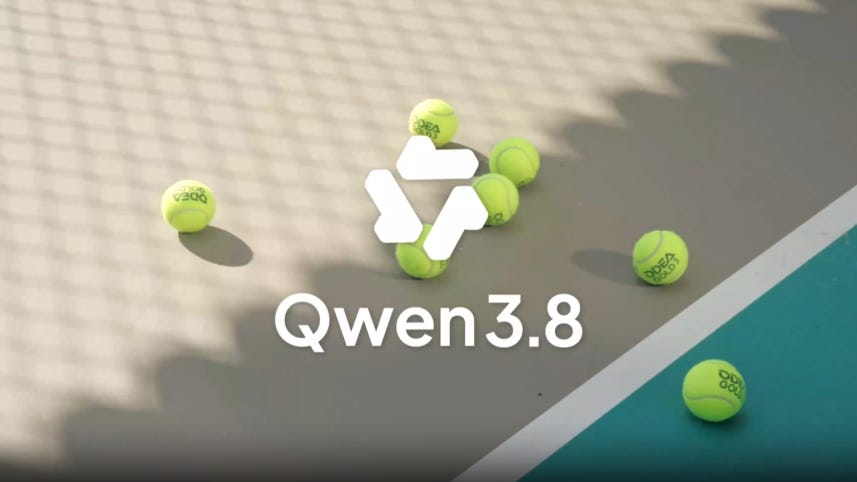
Image: Alibaba Cloud.
Alibaba launched Qwen3.8-Max as a 2.4-trillion-parameter multimodal model with 95B active at a time and a 1M-token context window. The company says it completed a 16-day autonomous coding project. The API is live, with open weights promised for the week of August 10.
The ranking needs precision. Qwen briefly appeared first on Artificial Analysis’s Agentic Index. After a grader and banking-benchmark update, the current leaderboard puts Claude Opus 5 Max first and Qwen tied for second.
The most interesting part was the launch film. People fish, climb, play tennis, and read while the agent works in the background. The official line is: “You live your life. It does the work.”
Why this matters at work: Knowledge work will increasingly be redesigned around what keeps running between meetings, not only around what a chatbot can answer while you watch.
7. AMD is buying a company that turns models into chips
Image: AMD Newsroom.
This is the biggest one I find most interesting. This week AMD signed an agreement to acquire Taalas, a company building model-specific inference silicon.
Taalas hardwires one model into mask ROM and uses SRAM for its working memory. Its HC1 demonstration chip holds Llama 3.1 8B and produces a company-reported 16,960 tokens per second.
The catch is flexibility. A major model update means manufacturing new silicon. The current chip is also a roughly 250W data-center product, not something going into your phone tomorrow.
Still, think about 4K video decoding. Dedicated hardware made a difficult computation feel almost free. Stable AI workloads such as moderation, translation, fraud checks, routing, and voice interfaces could follow that path.
Why this matters at work: Repetitive AI functions may become faster, cheaper, and more private, but executives will have to trade easy model updates for the economics of dedicated infrastructure.
8. Google changed AI leaders while the stack changed shape
Image: Google.
Google announced that Demis Hassabis is handing day-to-day control of Google DeepMind to Koray Kavukcuoglu. Hassabis becomes chair of Google DeepMind and Alphabet’s chief scientist, with more focus on AGI, science, and Isomorphic Labs.
Jeff Dean is leaving after 27 years to start Discovery Loop with Sanjay Ghemawat. Google will invest and remain a cloud partner.
Alphabet shares fell about 4% after the announcement. I found no credible evidence that Google kept Hassabis inside the company because it feared the stock would crash. The evidence supports a voluntary shift that had been developing for about a year.
Why this matters at work: Keep prompts, evaluations, and workflow logic outside one vendor’s model so a leadership or product shift does not strand the process.
The pattern underneath the week
This was not the week one model won.
It was the week intelligence moved another layer into the background: behind a safety policy, a database query, a weather warning, a coding agent, a routing decision, or a piece of silicon.
Most models are already good enough for a large share of knowledge work. The advantage will come from routing each job to the cheapest controllable system that reliably clears its quality bar.
Would you rather build on the best closed model through an API, or an open model that is slightly worse but cheap enough to run constantly and under your control?